

Best Podcast Website Examples and Templates
Having a professional podcast website is one of the most impactful things you can do to grow your audience and establish your brand. While you don't technically need a website to run a podcast, the podcasters who invest in a dedicated website consistently outperform those who don't — in SEO, audience engagement, email list growth, and monetization.
In this guide, we'll explore real podcast website examples from successful shows, break down what makes each one effective, and help you understand how to create a website that works for your podcast.
📋 In This Guide
- Why Do I Need a Podcast Website?
- Podcast Hosting Sites vs. Podcast Websites
- Why a Website When You're on Apple Podcasts & Spotify?
- Is a Podcast Website Too Much to Maintain?
- How to Make a Podcast Website
- Must-Have Podcast Website Features
- Podcast Website Design Tips
- Best Podcast Website Examples
- Conclusion
Why Do I Need a Podcast Website?
If you have a podcast, having a website dedicated to it is essential for several reasons. First and foremost, a website serves as a central hub for all your episodes, making it easier for your audience to find and listen to them. Instead of scrolling through various podcast platforms, they can simply visit your website and access all your content in one place.
A website also allows you to:
- Establish your brand: Customize the design to match your podcast's theme, add your logo, and create a unique visual identity that sets you apart.
- Build a community: Include comments sections, contact forms, and email subscription forms to engage with listeners directly.
- Boost discoverability: Optimize your content for search engines (SEO), making it easier for new listeners to find you through Google — something podcast directories alone can't do as effectively.
- Grow your email list: Capture subscriber emails to build your most valuable audience channel.
- Monetize: Display merchandise, affiliate links, sponsorship opportunities, and donation options.
In summary, a podcast website is crucial for organization, branding, community-building, and discoverability. Learn more about the 7 reasons why your podcast needs a website.
Podcast Hosting Sites vs. Podcast Websites — What's the Difference?
There is often confusion between podcast hosting sites and podcast websites, but they serve different purposes. A podcast hosting platform stores your audio files and generates the RSS feed that distributes your podcast to directories. It handles the technical infrastructure — storage, bandwidth, and distribution.
A podcast website, on the other hand, is your dedicated online presence — a branded space where you showcase your podcast, episodes, show notes, and additional content. It acts as a marketing hub for your show, providing a place for your audience to find information, contact you, subscribe to your email list, and engage with your content.
While a hosting site is essential for distribution, a podcast website enhances your overall presence and serves as a powerful marketing tool. Some platforms, like OnPodium, combine both — providing reliable hosting and a professional, SEO-optimized website in one package.
I'm on Apple Podcasts and Spotify — Why Do I Still Need a Website?
Having your podcast on Apple Podcasts, Spotify, and other platforms is essential — but it's not enough on its own. These platforms control the experience, and you don't own the relationship with your listeners. Here's what a website adds:
- Full control over branding and design: Customize every aspect of your online presence to reflect your podcast's unique identity.
- SEO traffic from Google: Your episode pages and show notes get indexed by Google, bringing in organic traffic that podcast platforms simply can't provide.
- Detailed analytics: Track visitor behavior, popular episodes, referral sources, and audience demographics to make data-driven decisions.
- Links and resources: Provide detailed show notes, resource links, guest bios, and supplementary content that enhance the listener experience.
- Audience ownership: Through email subscriptions, you build a direct relationship with your listeners that isn't dependent on any platform's algorithm.
Having a website adds professionalism, accessibility, and control to your podcasting endeavors that platforms alone can't match.
A Podcast Website Is Just Another Thing to Maintain — Do I Really Need It?
We understand the concern. Podcasters already juggle planning, recording, editing, and promotion — adding a website might seem like another burden. But here's the good news: modern podcast website builders handle most of the heavy lifting automatically.
With OnPodium, your website updates itself automatically when you publish new episodes. You don't need to manually create episode pages, update your homepage, or manage technical details. The built-in automation keeps your website current without any maintenance on your part.
The benefits — SEO visibility, email list growth, brand building, and monetization opportunities — far outweigh the minimal time investment, especially when using a platform designed specifically for podcasters.
How to Create a Podcast Website
There are several approaches to building a podcast website, each with different trade-offs in terms of cost, complexity, and time:
- General website builders (WordPress, Squarespace, Wix) — powerful and flexible but require significant setup time and ongoing maintenance. WordPress requires plugins, themes, and technical know-how. WordPress may not be the best option for podcast websites.
- Podcast-specific website builders (OnPodium) — purpose-built for podcasters with automated episode pages, built-in podcast players, SEO optimization, email marketing, and professional templates. Minimal setup and zero ongoing maintenance.
- Custom development — hire a developer for a fully custom website. Most expensive option, but gives you complete flexibility.
For most podcasters, a podcast-specific builder offers the best balance of professional results, minimal effort, and affordable pricing. OnPodium includes a free domain with every plan, professional templates, and automated features that keep your website running on autopilot.
Must-Have Features for the Best Podcast Website
When building your podcast website, make sure it includes these essential features:
- Automated episode pages: New episodes should appear on your website automatically when published — no manual updates needed.
- Built-in podcast player: Let visitors listen to episodes directly on your site, converting casual browsers into subscribers.
- SEO optimization: Your site should be search engine optimized with fast loading speeds, proper meta tags, and structured data so Google can index your content effectively.
- Email subscription forms: Capture visitor emails to build your newsletter list — your most valuable growth channel.
- Responsive design: Over 60% of web traffic comes from mobile devices. Your website must look perfect on all screen sizes.
- Contact page: Essential for potential sponsors, guests, and new listeners who want to reach you.
- Reviews section: Display podcast reviews to build social proof and credibility with new visitors.
- Platform links: Make it easy for visitors to subscribe on their preferred listening app.
- Show notes and transcripts: Detailed episode show notes and transcripts boost SEO and improve accessibility.
For a deeper dive into all podcast website features, read our comprehensive podcast websites ultimate guide.
Podcast Website Design: Choose a Template That Fits Your Niche
Your website design should reflect the theme and atmosphere of your podcast. A true crime podcast needs a very different visual identity than a wellness podcast or a business show. Here are design principles to follow:
- Match your brand: Use colors, fonts, and imagery consistent with your podcast artwork and overall brand identity.
- Keep it clean: Cluttered websites with too many elements overwhelm visitors. Focus on the essentials: latest episodes, subscribe options, and clear navigation.
- Feature your latest episode prominently: Your most recent episode should be immediately visible above the fold.
- Use professional templates: Choose a template designed for podcasts rather than adapting a generic business template. Podcast-specific templates include built-in players, episode listings, and subscription features.
- Prioritize loading speed: Slow websites hurt SEO and cause visitors to leave. Look for website builders that deliver sites with 90%+ GTmetrix performance scores.
Best Podcast Website Examples
Let's look at real podcast websites that exemplify great design, functionality, and user experience. We've selected a range of shows across different niches and website builders to give you diverse inspiration.
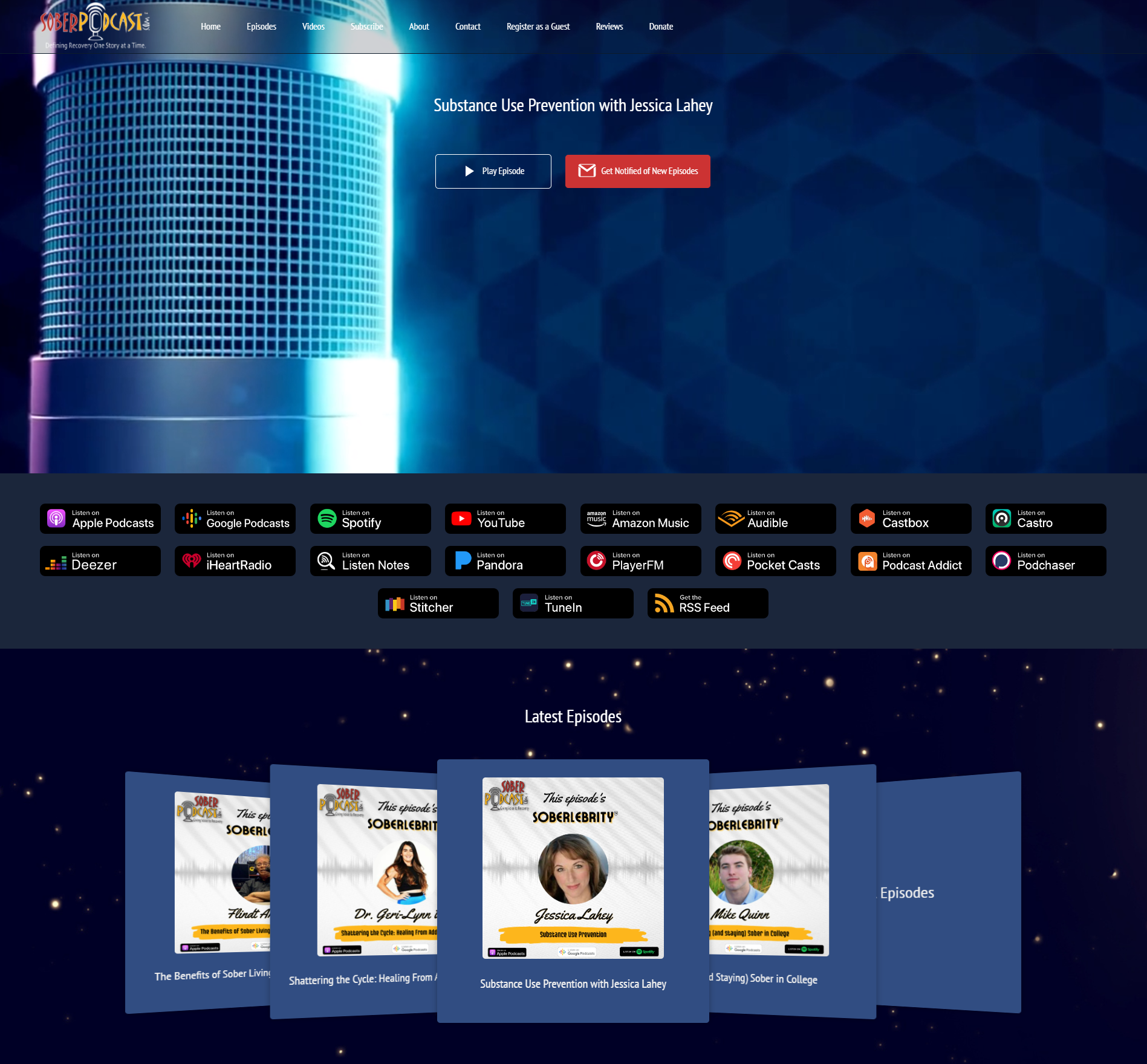
Website builder: OnPodium
Why we like this website: A minimalistic dark color scheme combined with a large background video creates an immersive first impression. The design is highly effective — the podcast logo establishes brand recognition immediately, the most recent episodes are featured prominently in the center, and all listening platforms are listed above the fold. The subscribe CTA button uses an eye-catching red-on-dark-blue contrast that drives email signups. The website achieves a 94% GTmetrix performance score.
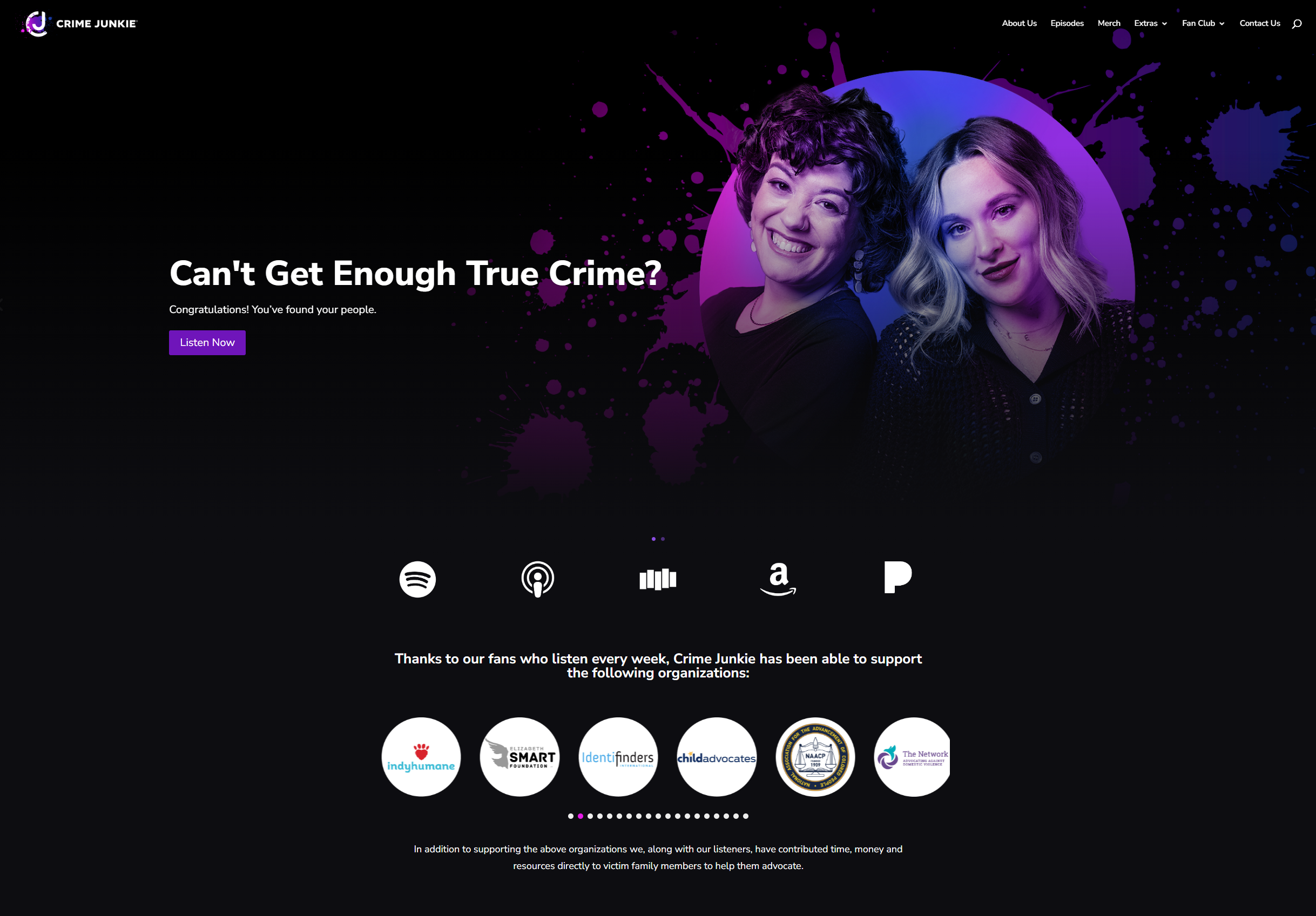
Website builder: OnPodium
Why we like this website: Crime Junkie is one of the most popular true crime podcasts, and their website matches the show's polished brand identity. Clean navigation makes it easy to browse episodes by category. The homepage features their latest episode with clear listening options across all platforms. Their merchandise section and fan community features demonstrate how a website can extend beyond just episode listings to create a complete brand experience. The site's responsive design ensures a seamless experience across all devices.

Website builder: OnPodium
Why we like this website: The website has a well-designed layout with a vivid color scheme that matches the podcast's branding. Latest episodes are showcased in an attractive carousel, and all listening platforms are listed beneath the hero image. The "Get Notified of New Episodes" CTA button in the top right is strategically placed to grow the email list. YouTube video integration showcases their video podcast episodes. The website achieves a 95% GTmetrix performance score.
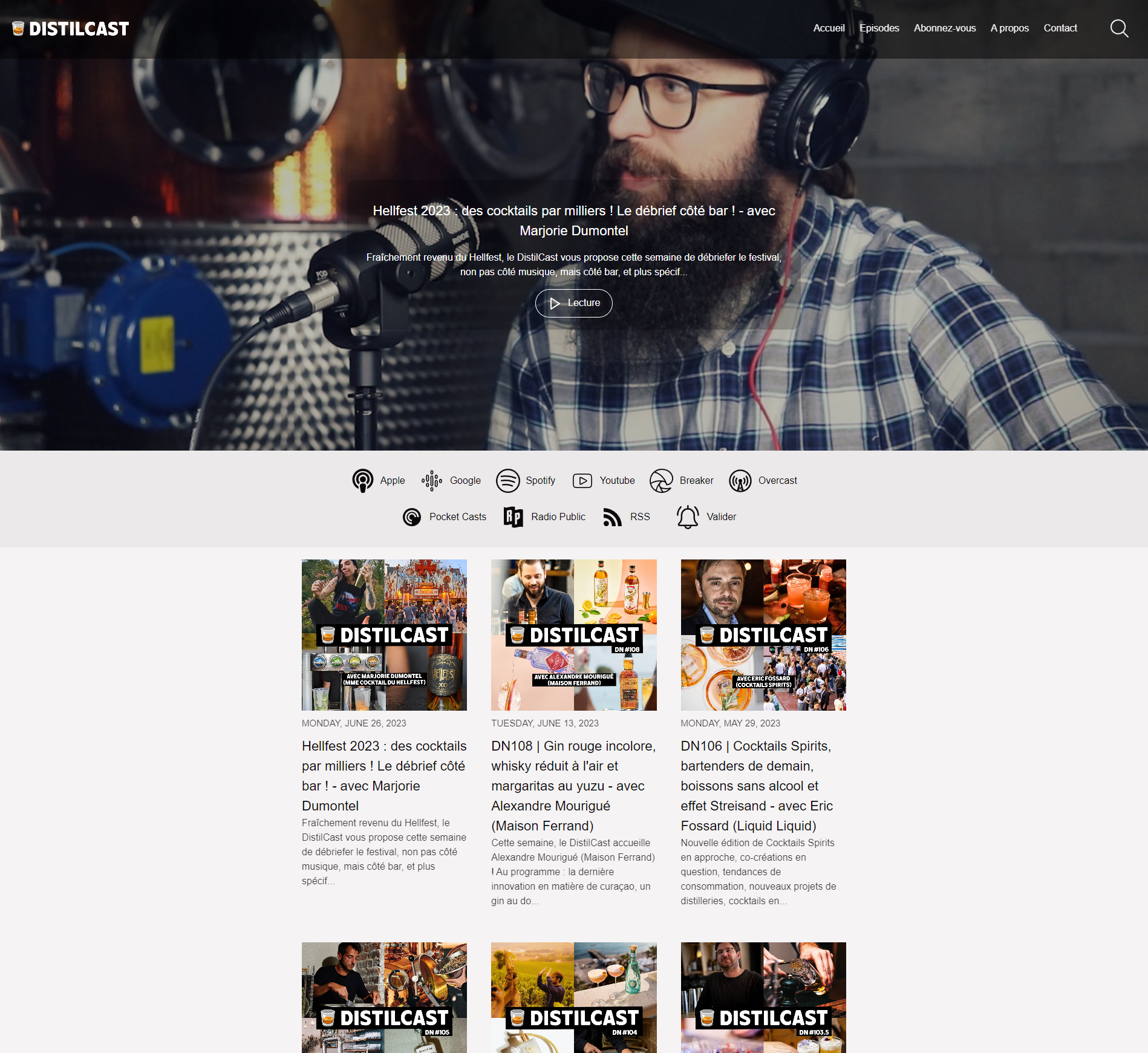
Website builder: OnPodium
Why we like this website: This podcast page exemplifies minimalist design done right. A clean layout makes the most important elements immediately visible. Each episode has its own unique image, and visitors can listen to recent episodes directly from the homepage without navigating away. All platforms and RSS feed links are listed centrally, making it easy for visitors to choose their preferred listening method.

Website builder: Squarespace
Why we like this website: The NewsWorthy's website excels at information delivery. They consistently use calls-to-action to guide visitors through the experience. While the website focuses primarily on the podcast, it smartly provides easy access to complementary content like newsletters and sponsor information, creating multiple engagement touchpoints for visitors.

Website builder: Squarespace
Why we like this website: Office Ladies' website is centered around understanding and captivating its audience. By communicating precisely what the podcast is about and who it's for, the website builds immediate connection with potential listeners. The design reinforces the show's warm, conversational brand, demonstrating that a podcast website should be an extension of the show's personality.
For a deeper analysis of podcast websites — including detailed template reviews and feature comparisons — read our complete guide to podcast websites, templates, and features.
Your Website Must Be Search Engine Optimized (SEO)
Simply having a podcast website is not enough — it needs to be SEO-optimized to maximize visibility and drive organic traffic. SEO involves implementing strategies that help your website rank higher in Google search results. Here's what matters most:
- Page loading speed: Slow websites get penalized in search rankings. Aim for 90%+ on GTmetrix. OnPodium websites achieve up to 99% performance scores.
- Keyword optimization: Include relevant keywords in your page titles, meta descriptions, and content. Use tools like Google Keyword Planner or Ubersuggest for research.
- Show notes and transcripts: Detailed show notes and transcripts give Google more text to index, improving your chances of ranking for relevant searches.
- Mobile responsiveness: Google uses mobile-first indexing — your website must look and work perfectly on mobile devices.
- Structured data markup: Schema markup helps search engines understand your content and can generate rich snippets in search results.
A well-optimized podcast website can become your largest source of new listeners over time, surpassing social media and even podcast directories in terms of consistent traffic growth.
Consider Monetizing Your Podcast Through Your Website
Your podcast website opens up monetization opportunities that aren't available through podcast apps alone. Here are the most effective strategies:
- Sponsorships: A professional website makes your podcast more attractive to potential sponsors. You can even create a dedicated "Advertise" page with audience stats and pricing.
- Listener donations: Add donation buttons or links to Patreon and Buy Me a Coffee. OnPodium's monetization features include built-in donation pages.
- Premium content: Offer exclusive episodes, ad-free versions, or bonus content to paying subscribers. Apple Podcasts Subscriptions also supports this model.
- Merchandise: Sell branded merchandise directly through your website.
- Affiliate marketing: Recommend products relevant to your niche and earn commissions through affiliate links in your show notes.
Conclusion: Build Your Podcast Website Today
Creating a professional podcast website is one of the highest-impact investments you can make for your show. It gives you a branded home base, boosts your SEO, enables email list growth, and opens monetization doors — all while providing a better experience for your listeners.
The podcast website examples above demonstrate that effective design doesn't have to be complicated. Focus on clean layouts, fast loading speeds, prominent episode display, and clear calls to action. Choose a template that matches your podcast's niche and personality.
If you're ready to create your own podcast website, try OnPodium free for 2 weeks. You'll get a professional, SEO-optimized website with a free custom domain, automated episode pages, email marketing tools, and responsive support from a team that understands podcasters. No technical skills needed — you can launch your podcast website in minutes.
If you want to go deeper into podcast website building, read our complete guide to podcast websites and learn how to start a podcast from scratch.