OnPodium vs Podbean: The Episode Landing Page Your Listeners Actually See
OnPodium isn't a podcast host. We're the episode landing page layer that sits on top of whatever host you already use — Podbean included. So this isn't a hosting comparison. It's a comparison of the page a listener actually opens when they tap a link to your episode in a tweet, a newsletter, or a Google result.
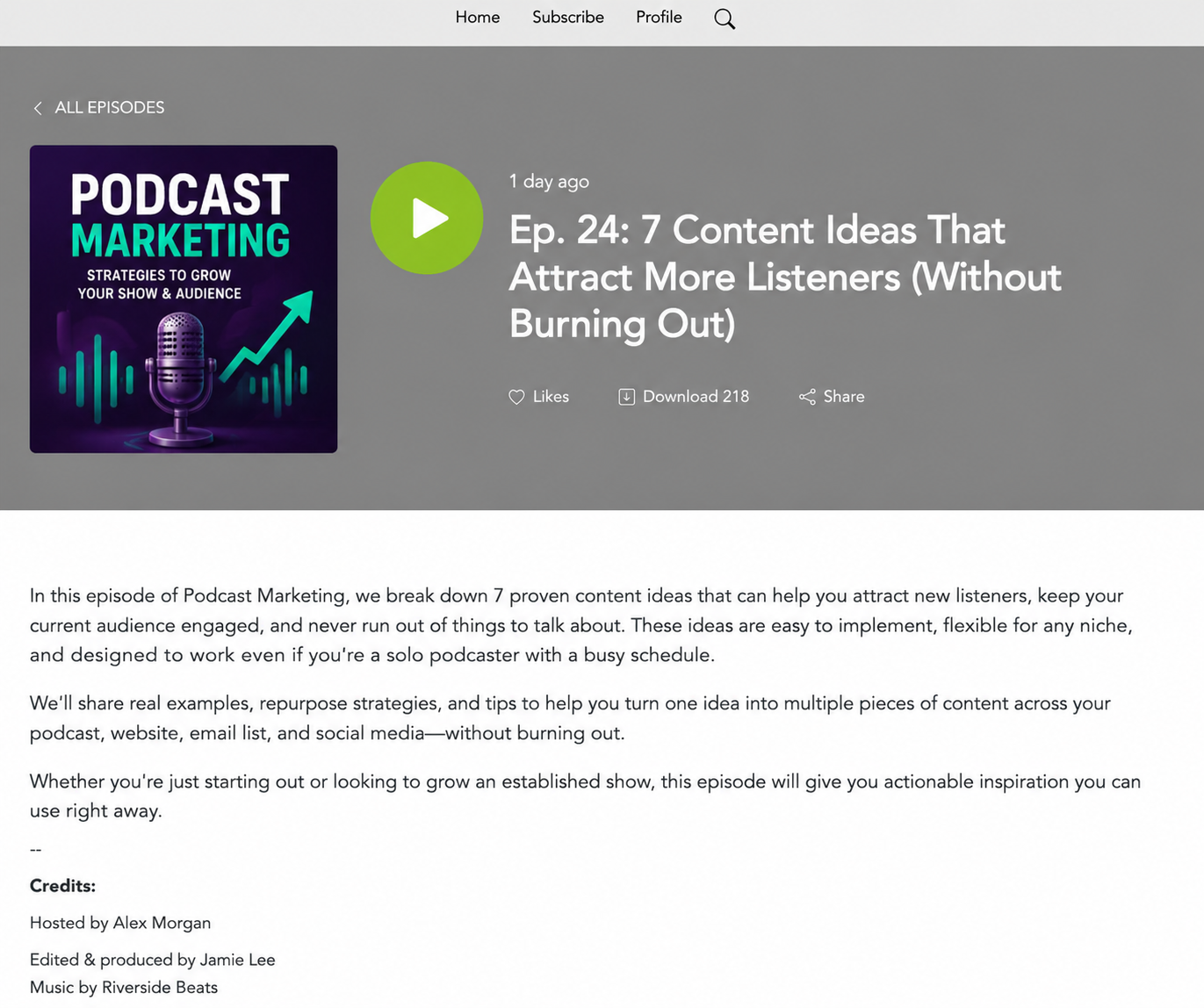
Podbean gives every show a clean episode page with a player, cover art, show notes, and engagement features like comments and likes built right in. It's one of the more social-feeling episode pages in podcasting. But it's still a fairly fixed template — no chapter teasers, no deep-link timestamps, no email capture on the page itself, and the URL lives on a Podbean subdomain unless you've wired up a custom domain.
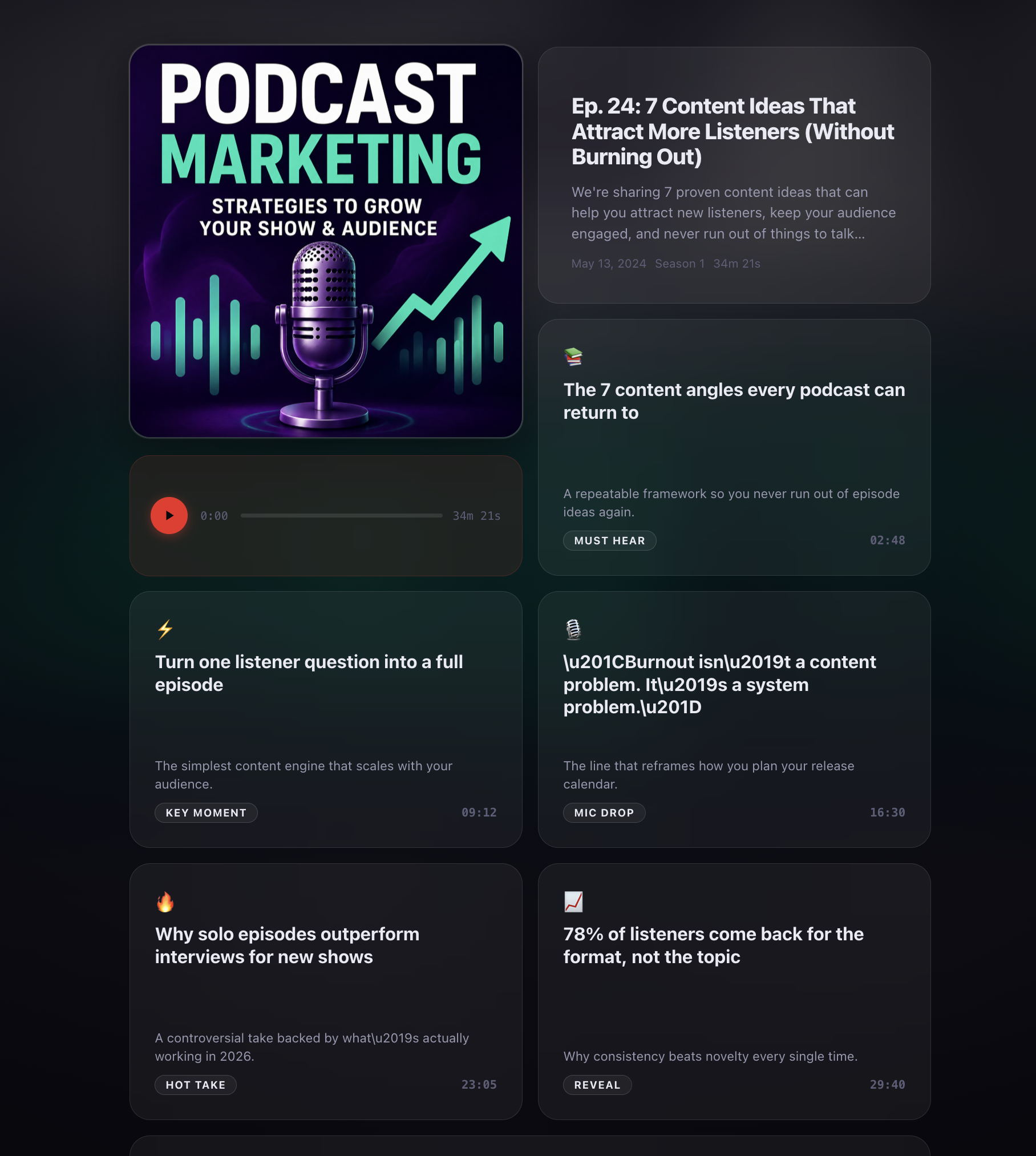
OnPodium turns the same episode into an immersive, branded landing page designed to convert visitors into listeners and listeners into subscribers — without changing your host.
Page-by-Page Comparison
| On the episode page | OnPodium | Podbean default |
|---|---|---|
| Audio player | Yes — bento layout, branded | Yes — Podbean-branded player |
| Timestamped chapter / moment teasers | 5 AI-generated, click-to-seek | No |
| Deep-link to a specific timestamp (#t=) | Yes — every teaser shareable | Manual share-from-time only |
| Show notes | Expandable, formatted | Plain text, always-on |
| "Next Episode" tile | Yes — keeps listeners on-page | No |
| Custom domain | Yes — your-show.com/episode/… | Subdomain on podbean.com by default |
| Branded look (your colors, art, type) | Full visual control | Theme + accent color only |
| SEO-optimised metadata + JSON-LD | PodcastEpisode schema, OG, Twitter | Basic title + description |
| Email capture on the episode page | Built-in | No |
| Footer branding | Subtle "Powered by OnPodium" | Podbean branding throughout |
| Works with Podbean as your host? | Yes — pulls from your RSS | — |
| You have to switch hosts | No | — |
What Podbean's Episode Page Gives You
The default Podbean episode page is one of the friendlier ones in the industry. You get a square cover-art header, a Podbean-branded player, your show notes, a comment section, like and download counters, and a row of subscribe buttons. It feels more like a community than a directory listing.
What it doesn't do is sell the episode itself. There's no pre-listen hook, no way to share a specific moment, no related-episode tile to keep listeners going, and no email capture on the page itself. The page treats your episode like a social post, not a piece of content worth marketing.
What an OnPodium Episode Landing Page Adds
OnPodium reads the same RSS feed Podbean publishes and renders each episode as a bento-grid landing page. The audio player is still front-and-centre, but it shares the page with five AI-generated moment teasers: short, scrollable cards that play the episode from a specific second when tapped. Each teaser is also a deep link, so you can share your-show.com/episode/...#t=492 on social and listeners land directly on the moment.
Below the player you get an expandable show-notes section, a "Next Episode" tile to keep autoplay going, an "All Episodes" link back to your show home, and proper PodcastEpisode JSON-LD plus Open Graph and Twitter card metadata so your link previews look like a magazine article instead of a directory listing.
It runs on your custom domain, in your colors, with your art — and a subtle "Powered by OnPodium" tag in the footer that you can hide on paid plans.
You Don't Have to Leave Podbean
OnPodium isn't asking you to migrate. Keep hosting on Podbean. Keep the comments, the patron features, the dynamic ad insertion, the directory submissions you've set up. Just point OnPodium at your Podbean RSS feed and we generate an OnPodium landing page for every episode you publish — past and future — automatically.
From then on, when you share an episode link, you share the OnPodium URL. Your listeners get the upgraded page; your show stays on Podbean.
Keep Podbean. Upgrade the Page.
Connect your Podbean RSS in under a minute and get an immersive, deep-linkable landing page for every episode.
Try OnPodium freeWhen Podbean's Page Is Enough
If you're still finding your format, post infrequently, and mostly send listeners to Apple or Spotify rather than to a web page, the default Podbean episode page does the job. There's no reason to add another tool to your stack.
When OnPodium Pays for Itself
If you're actively marketing episodes — embedding them in newsletters, sharing pull-quotes on social, running ads to a specific episode, or pitching guests with a link to their episode — the page itself becomes a conversion surface. Timestamped teasers, deep-link sharing, branded design, and email capture all turn into measurably more plays per visitor.
The Bottom Line
Podbean is a fine podcast host. For what it costs, the default episode page does what it needs to.
OnPodium is built specifically to be the page you send traffic to. Same episode, same audio, same RSS — but a landing page designed to grow your show. Use both.
More Episode Page Comparisons
See how OnPodium episode landing pages stack up against the default page from every major podcast host.