
Podcast Name Ideas
We analyzed over 200,000 active, long-running podcasts to uncover the hidden naming patterns that actually drive success and longevity.
How to Choose the Perfect Podcast Name (And Why It Matters)
Choosing the name for your podcast
is one of the most important and serious step when creating a new
podcast. It's very similar like choosing the name for a
business, so you should treat it like naming your new business. You cannot just pick a
name because it sounds fun and you think it's a pefect match for your podcast, also you
should not use a random tool to create a generic name for you (there are plenty of
podcast name generators our there).
You must do real research
first.
Why? Because if your name is too long, too simple, or sounds just like a well
established podcast (or business, or any other kind of brand), listeners will not find
you. You do not want to compete with a big names that already uses this name. Do not
rush this part. You need to be 100% sure that your name is special, clear and does not
belong to anyone else, so you won't waste additional effort on competition or rebranding
later on.
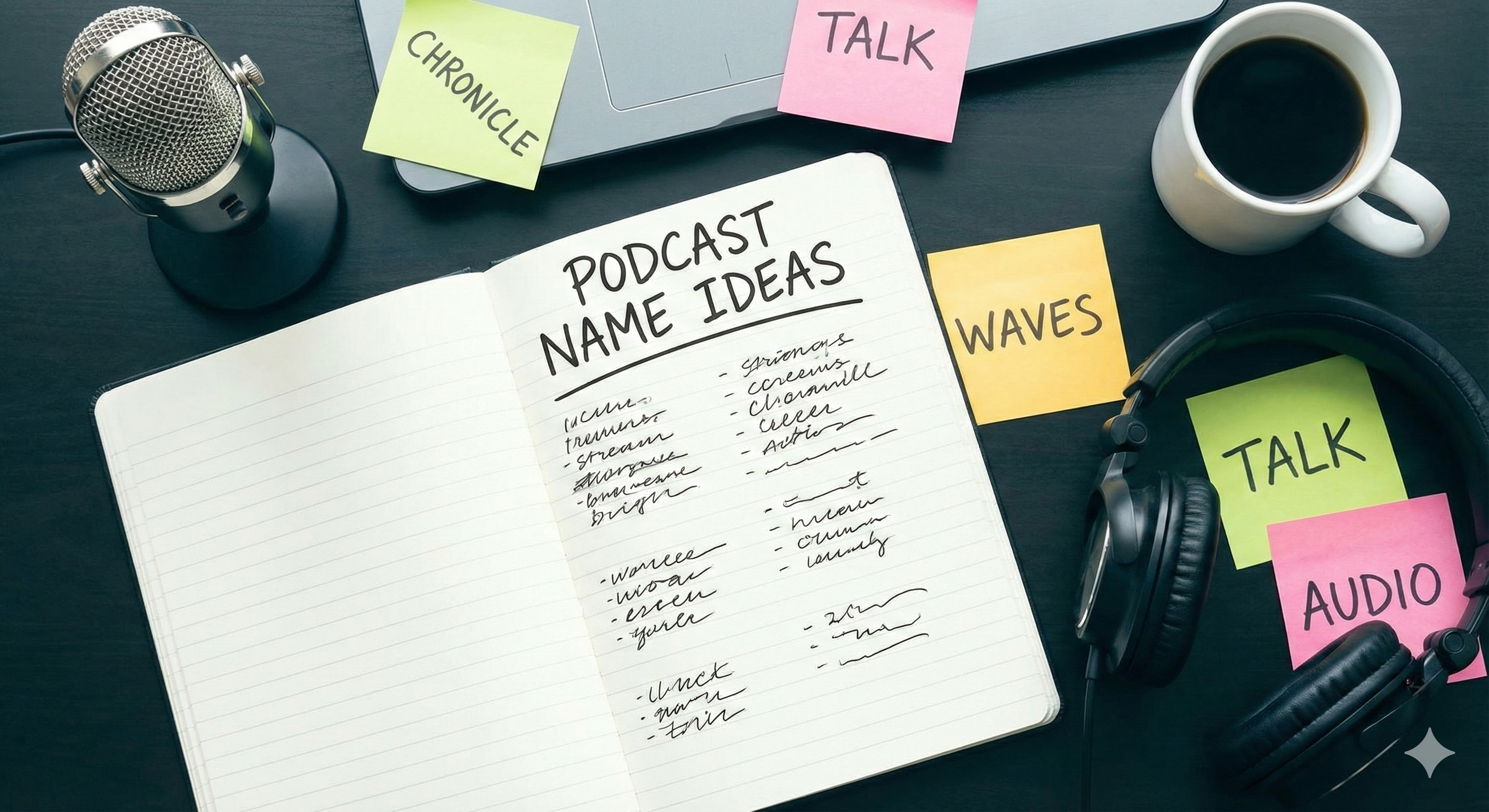
Tips for choosing a podcast name
- Descriptive: The name should give listeners an idea what your podcast is about.
- Short: 2 to 4 words (ideally up to 3) - still try to have it descriptive.
- Memorable: Your podcast name should be catchy, easy to say and easy to spell.
- Availability: Ensure it's available as a domain name (.com .fm are great domain extensions for podcast), on podcast directories and on social media platforms.
- Test it: Say the podcast name aloud, get feedback from people to see how it sounds, if they can guess what it's about.
Common podcast name mistakes
- Podcast name is taken: Using a taken name risks legal trouble, also unavailable domains and handles make branding much harder and could even end up with rebranding.
- Too vague or generic: A name like "Friends" is unlikely to stand out as it's not specific at all.
- Insider jargon: Don't use terms and words in the podcast name that only your immediate circle understands, it can prevent you from expanding your topic later.
- Adding "podcast" word: including the word "podcast" takes up valuable space (see Tip #2), choose another word for more descriptive keywords and stronger podcast name.
- Already taken or very similar to existing podcast: This is a major issue that could cause audience confusion and legal issues. Search for podcasts on platforms Apple Podcasts, Spotify and Podchaser
The 10 "Formulas" Behind Successful Podcast Names
Creative names rarely happen accidentally. If you look closely at the top podcasts on Apple and Spotify, you will notice they aren't random. Most succesful podcast names rely on structures that signal quality and relevance. Instead of guessing random names try to apply one those 10 established formulas to create the podcast name that sticks and works well.
These names tell the listener exactly what is in the tin. They are high on clarity and excellent for SEO, but low on mystery.
- Formula: [Topic] + [Format/Role]
- Best For: Educational, Business, and Niche Hobbies.
- Examples: Marketing School, The Property Podcast, The Daily.
- Why it works: Zero confusion. If someone searches for "Marketing," you show up.
The classic "The [Name] Show." This relies entirely on the host's reputation.
- Formula: The [Your Name] Show / Experience / Podcast
- Best For: Influencers, Celebrities, and Coaches building a personal brand.
- Examples: The Joe Rogan Experience, The Tim Ferriss Show.
- Why it works: It builds authority around you.
- ⚠️ Risk: Harder to sell the podcast later if you want to exit, because the brand is you.
Clever, witty, and often uses idioms or rhymes. These names signal that the show will be entertaining and likely not too serious.
- Formula: [Idiom Twist] or [Rhyme]
- Best For: Comedy, Pop Culture, and Casual Commentary.
- Examples: Pod Save America, 99% Invisible, My Dad Wrote a Porno.
- Why it works: It’s sticky. A good pun is hard to forget.
These names call out the specific type of person the show is for. It creates an instant "us vs. them" feeling.
- Formula: [Adjective] + [Identity/Group]
- Best For: Lifestyle, Parenting, and specific Careers.
- Examples: Indie Hackers, Girlboss Radio, The Minimalists.
- Why it works: It creates instant belonging. "Oh, I'm an Indie Hacker, this is for me."
These names don't describe the topic directly but evoke a feeling or an image. They sound "expensive" and high-production.
- Formula: [Evocative Noun] or [Abstract Concept]
- Best For: Storytelling, True Crime, and High-Production Audio Dramas.
- Examples: Serial, Lore, Criminal, Radiolab.
- Why it works: It sparks curiosity ("What does 'Serial' mean?").
- ⚠️ Risk: Requires good cover art and a subtitle to explain what the show is actually about.
Motivational and outcome-oriented. These names promise a result or a transformation.
- Formula: [Verb] + [Goal/Topic]
- Best For: Self-improvement, Finance, and Fitness.
- Examples: How I Built This, Invest Like the Best, Dying to Ask.
- Why it works: It promises value. The listener knows they will learn how to do something.
Naming your show with a question immediately engages the brain's need for an answer.
- Formula: [Provocative Question]?
- Best For: Dating, Philosophy, and Investigative Journalism.
- Examples: Why Won't You Date Me?, Who? Weekly, Am I Normal?
- Why it works: It turns a passive scroller into an active thinker.
Pairing two words that don't usually go together to create tension or humor.
- Formula: [Serious Word] + [Silly Word]
- Best For: Cultural Commentary, Modern Life, and Psychology.
- Examples: Murder, She Spoke (Crime + Cozy), Code Switch.
- Why it works: The brain notices patterns that break; contrasting words stand out in a feed.
Using a term that only people in that niche would understand.
- Formula: [Niche Specific Term]
- Best For: Coding, Gaming, Medical, or deeply technical fields.
- Examples: Stack Overflow (Devs), The 4th Line (Hockey), Triage (Medical).
- Why it works: It acts as a secret handshake. If you know what the word means, you are the target audience.
Anchoring the podcast to a specific city or region.
- Formula: [City/Region] + [Topic]
- Best For: Real Estate, Local News, and Travel Guides.
- Examples: The New York Times Daily, London Real, This Week in Startups.
- Why it works: Extremely high trust for local listeners and very easy to rank for local SEO.
Podcast Name Generators
There are many free podcast name generators, but you shouldn't rely
on them 100%. Most of such tools are just "wrappers" for basic AI (for example ChatGPT),
it works very straightforward: simply takes your description and asks ChatGPT to "make a
list of names." You could do that yourself directly on ChatGPT! The
problem is that suggestions you get are often random and generic variants, so the hard
work is left to you. You need manually checking for trademarks, available websites, and
social handles to avoid the legal issues mentioned above.
That is why we built a different AI podcast name generator. Our
generator isn't wrapping basic AI, it has been trained on database with more than
200,000 successful, active podcasts. It understands what makes a podcast name stick and
it doesn’t just give you a name - it runs an initial analysis on SEO and availability
right away, saving you from spending time on potential podcast names you can't actually
use.
Frequently Asked Questions About Naming a Podcast
While ChatGPT is a great brainstorming buddy, it has a major blind spot: it doesn't know what is currently available. It will happily suggest a perfect name like "The Daily Grind," unaware that there are already 15 podcasts, a coffee shop chain, and a trademark holder with that exact name. Using a standard AI "wrapper" forces you to manually fact-check every single suggestion. Our tool differs because it is trained on 200,000+ active podcasts and performs immediate availability checks, filtering out the "noise" so you don't waste time on taken names.
Yes, but be careful. Including a keyword (like "Marketing," "True Crime," or "Vegan") helps listeners find you when they search for a topic. However, Apple Podcasts creates issues for titles that look like spam.
- Good: "The Digital Marketing Masterclass"
- xBad: "Marketing | SEO | Social Media | Business Tips 101"
Aim for a natural title where the keyword fits legally and grammatically.
This is a risky move. Even if you don't plan to build a website
immediately, not owning the domain makes it much harder to build a brand
later. If the .com is taken by a similar business, you will confuse your
audience.
Pro Tip: If the exact domain is expensive or parked, try adding
"pod" or "show" to the URL (e.g., marketingmasterclasspod.com). If an
active business already owns the main domain, it is usually safer to
pick a different name entirely.
Checking podcast apps (Apple/Spotify) is not enough. A name might not be a podcast yet, but it could be a registered brand that can legally force you to take your show down.
- Search Google: Look for businesses using the name.
- Search Social Media: Check Instagram, TikTok, and X handles.
- Search Databases: Use the USPTO (for US) or WIPO (Global) trademark database searches. Our advanced generator runs initial checks to flag potential conflicts, but for total peace of mind, always do a final legal check before spending money on artwork.
Short and punchy is best. Aim for 29 characters or less. Why? Because on most podcast apps, titles longer than that get cut off with ellipses (...) on mobile screens. If your distinguishing word is at the end of a long sentence, potential listeners scrolling through their phone won't see it.
Technically, yes—you can change the text in your RSS feed, and it will update on Spotify and Apple. However, you will lose brand recognition. Listeners might unsubscribe if they don't recognize the new name, and you will have to rebuild your SEO ranking from scratch. It is much better to spend the extra time now to find a name you can grow with for years.
OnPodium - Everything your podcast needs, finally together. Just the features you need, no bloat.
No more juggling multiple platform subscriptions and struggling with complex integrations between different tools. Get everything you need in one place, all for a single, fixed price with no limits.
Podcast Hosting
Unlimited shows, unlimited traffic, unlimited storage - one flat fee, always, like no other podcast hosting platform.
Podcast Website
Not just a basic site that lists episodes - enjoy a fully featured, automated podcast website with professional design templates, a blog, custom pages, and more.

Email Marketing
Other email marketing providers charge more for bigger lists or sends; we don’t - unlimited subscribers and emails at no extra cost.
Monetization
Sell anything you can imagine and keep 100% of your earnings - no commissions.
Buzzsprout, Podbean, Libsyn, Acast and Simplecast.
Host your podcast.
Get your podcast listed on Spotify, Apple Podcasts, and other major podcast networks. Track how your podcast is performing with analytics tools.
Learn More
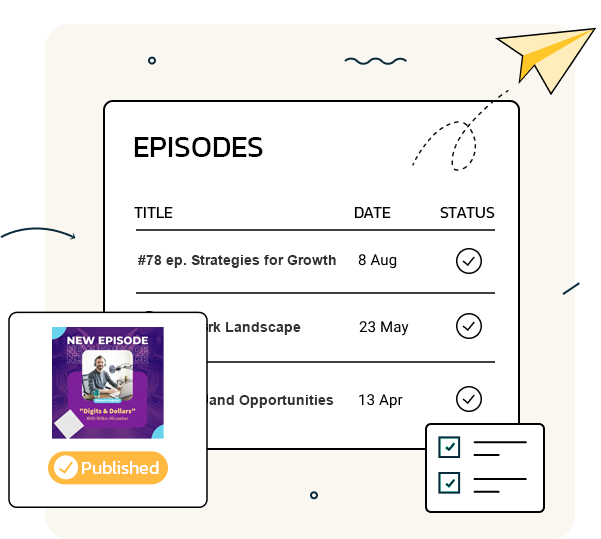
WordPress, WIX and Squarespace.
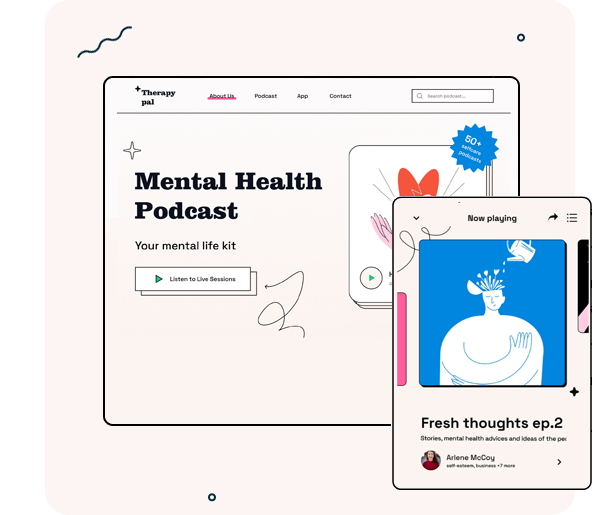
Podcast website builder
Create a professional-looking website in just a few clicks with intuitive and easy-to-use podcast website builder.
Learn More
Mailchimp, GetResponse, ConvertKit and ActiveCampaign.
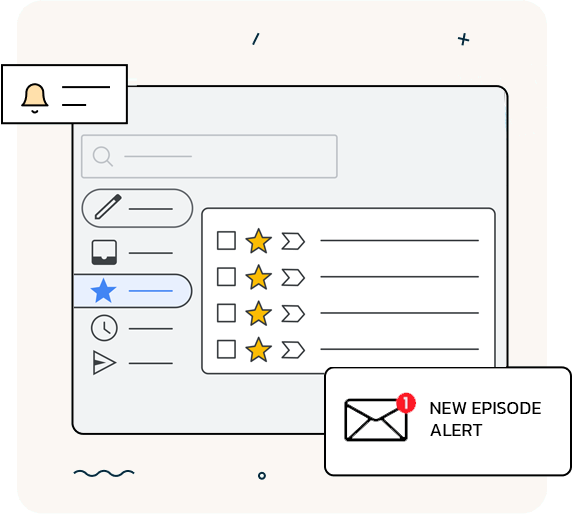
Email marketing
Grow your podcast's listener base faster and monetize smarter with email marketing built-in.
Learn More
Gumroad, Kajabi, Patreon and Thinkific
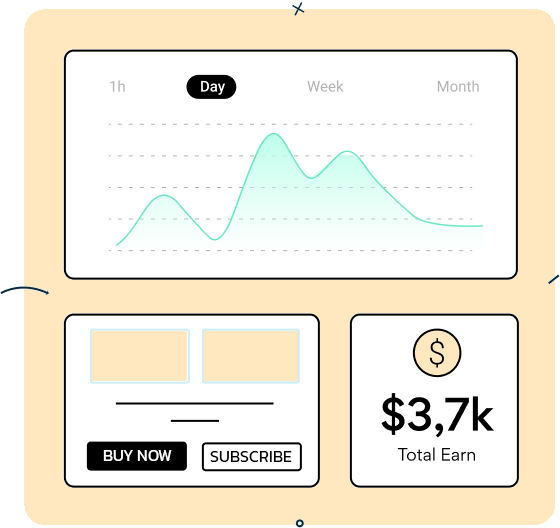
Sell courses, webinars and downloads
Sell pretty much anything with no transaction fees. OnPodium handles product hosting and delivery so you can focus on your podcast.
Learn More

Podcasters love us & we love them
Kind words from our podcasters.
We started using OnPodium for several podcasts we broadcast. It is a simple platform, which is what we were looking for, to upgrade our look/feel and user accessibility. The team at OnPodium have been extremely responsive to changes we needed, and the pricing is very reasonable.

Joanie Sigal
Host at The Addiction Podcast theaddictionpodcast.com
Working with Gintaras at OnPodium was a game-changer for my podcast website. They didn't just create a site; they crafted a masterpiece. The professionalism, creativity, and attention to detail were exceptional. If you want your podcast website to be a true work of art, OnPodium is the way to go!

Denise Griffitts
Host at Your Partner In Success™ Radio yourpartnerinsuccessradio.com
OnPodium is a game changer for our podcast! We used to update our website every time a new podcast episode was released. Now it happens automatically and is a huge timesaver for us! The support and support is first class whenever we have any questions or need assistance. I highly recommend giving OnPodium a try!

Matt Cook
Host at Pull Hook Golf pullhookgolf.com
Great time saver! Super fast and easy to set up. It took me just about 1 hour to have my first website ready (including setting up my custom domain and translating all the titles, buttons, etc.) I can now focus on creating my podcast, while all the website part is working itself automatically (episodes pages, player, subscription links, mobile friendly, contact page, donations, ...)

Frédéric Roginska
Host at DistilCast distilcast.com
For almost two years I was looking for a website that fit my needs for a podcast. OnPodium meets the needs of my podcast and the designs fit within the lane. The customer service department is responsive and takes my suggestions into account, a couple months in and I'm excited to see the growth.

DJ JEL
Host at JEL | The Soca Boss jelinthemix.com
Above & Beyond Customer Service. I'm so happy I signed up with OnPodium. I love the way my podcast webpage looks and it updates automatically. I used to have to upload everything myself. So much better! Things that would have taken me ages to navigate, he was happy to help me with and I'm so grateful.
